
← All authors
c. 675 – 749

John of Damascus

Worth knowing

  • Born to a Christian family in Damascus that served the Muslim caliphs. He worked in the caliph's administration before becoming a monk at Mar Saba near Jerusalem.
  • His Fount of Knowledge summed up Greek Christian teaching. One chapter is the earliest substantial account of Islam by a named Christian writer.
  • When the emperor Leo III began removing images from churches, John defended them from outside the emperor's reach. The game presents his case and does not follow the Second Council of Nicaea on images.

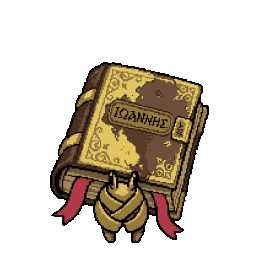
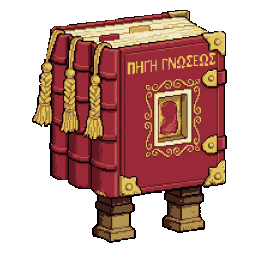
In Scholar’s Dream, John of Damascus has three books

John of Damascus’s quotes in the game

Every quotation from John of Damascus that a player meets in Scholar’s Dream, attached to the move that says it. Or see them as a plain list →

In Scholar’s Dream, books argue with each other, and each thing a book can do in a debate is called a move. Every quote below is spoken by one of those moves. Open “How it works in the game” under a quote to see the move, which books learn it, and which arguments it answers best.

“All things, that exist, are either created or uncreated. If, then, things are created, it follows that they are also wholly mutable.”

John of Damascus, An Exact Exposition of the Orthodox Faith 1.3 (trans. Salmond, NPNF² 9, public domain).public domain

“But things that are created must be the work of some maker, and the maker cannot have been created. For if he had been created, he also must surely have been created by some one, and so on till we arrive at something uncreated.”

John of Damascus, An Exact Exposition of the Orthodox Faith 1.3 (trans. Salmond, NPNF² 9, public domain).public domain
How it works in the game: the move Created or Uncreated
Natural TheologyArgument · power 70 · 100% accurate

In the gameA dilemma with only two doors, and one of them opens on God. Everything that exists was made or was not; whatever was made needs a maker; the regress has to stop.

Learned byExact Exposition (Lv 1)

“Therefore I venture to draw an image of the invisible God, not as invisible, but as having become visible for our sakes through flesh and blood. I do not draw an image of the immortal Godhead. I paint the visible flesh of God.”

John of Damascus, On Holy Images 1 (trans. Mary H. Allies, 1898, public domain).public domain
How it works in the game: the move The Image of the Invisible
ChristologyArgument · power 84 · 100% accurate

In the gameJohn of Damascus argues from the Incarnation. He is not painting God; he is painting the flesh God took. Whether that answers the second commandment is the real question, and this is his case at its strongest.

Learned byOn Holy Images (Lv 1), Damascene’s Corpus (Lv 52)

“Moreover the Word must also possess Spirit. For in fact even our word is not destitute of spirit.”

John of Damascus, An Exact Exposition of the Orthodox Faith 1.7 (trans. Salmond, NPNF² 9, public domain). Distinct from Timothy I’s sun/light/heat: this one reasons from the arguer’s own mind rather than from the sky.public domain
How it works in the game: the move The Word and the Spirit
Theology ProperArgument · power 66 · 100% accurate

In the gameYour own thinking is the analogy: a mind, the word it forms, and the breath that carries it. Faint, and not nothing.

Learned byExact Exposition (Lv 36), Damascene’s Corpus (Lv 56)

“The image is a memorial, just what words are to a listening ear. What a book is to the literate, that an image is to the illiterate. The image speaks to the sight as words to the ear; it brings us understanding.”

John of Damascus, On Holy Images 1 (trans. Mary H. Allies, 1898, public domain).public domain
How it works in the game: the move A Book to the Unlettered
EcclesiologyArgument · power 70 · 100% accurate

In the gameThe pastoral half of the argument, and the half that actually persuaded most of Christendom: most people in an eighth-century church could not read a word of the book being preached from.

Learned byOn Holy Images (Lv 38)

“So then this one and only God is not Wordless. And possessing the Word, He will have it not as without a subsistence, nor as having had a beginning, nor as destined to cease to be.”

John of Damascus, An Exact Exposition of the Orthodox Faith 1.6 (trans. Salmond, NPNF² 9, public domain).public domain

“For there never was a time when God was not Word: but He ever possesses His own Word, begotten of Himself.”

John of Damascus, An Exact Exposition of the Orthodox Faith 1.6 (trans. Salmond, NPNF² 9, public domain). The sentence answers Arius in Arius’ own words — “there was when he was not.”public domain
How it works in the game: the move God Is Not Wordless
Theology ProperArgument · power 72 · 100% accurate

In the gameReason its way toward the Trinity instead of asserting it: a God who is living and rational was never without his Word, and a Word with no beginning is not a creature.

Learned byExact Exposition (Lv 39), Damascene’s Corpus (Lv 48)

“I do not worship matter, I worship the God of matter, who became matter for my sake, and deigned to inhabit matter, who worked out my salvation through matter.”

John of Damascus, On Holy Images 1.16 (trans. Mary H. Allies, 1898, public domain). The modern phrasing “I worship the Creator of matter” is a different, later rendering.public domain
How it works in the game: the move The God of Matter
ChristologyArgument · power 74 · 95% accurate

In the gameJohn of Damascus wrote this to an emperor who was destroying images. His argument is that God took a body, and a faith embarrassed by matter has not understood what happened.

Learned byExact Exposition (Lv 42), On Holy Images (Lv 42)

“We hold that there has been a union of two perfect natures, one divine and one human… without change or confusion or alteration or difference or separation.”

John of Damascus, An Exact Exposition of the Orthodox Faith 3.3 (trans. Salmond, NPNF² 9, public domain), eliding the list of names he refuses in between.public domain
How it works in the game: the move Two Perfect Natures
ChristologyArgument · power 80 · 100% accurate

In the gameChalcedon, held steady against the error on either side of it — the union that blurs the two, and the union so loose it is only an agreement.

Learned byExact Exposition (Lv 45), Damascene’s Corpus (Lv 48)

Strong against
×2.5Summa Theologiaea book · why?

Aquinas cites John of Damascus for this teaching again and again in the Summa (III, q.2): two natures, one person.

“Fear, then, compelled me to speak; the truth was stronger than the majesty of kings.”

John of Damascus, On Holy Images 1 (trans. Mary H. Allies, 1898, public domain).public domain
How it works in the game: the move Stronger Than Kings
FaithArgument · power 78 · 100% accurate

In the gameEmperor Leo III was pulling down images in Constantinople. John of Damascus could answer him freely because the emperor could not reach him: John lived at Mar Saba, under a Muslim caliph.

Learned byOn Holy Images (Lv 46)

Passages you can read in the game

Longer excerpts the Scriptorium holds on screen for a player to sit and read, word for word.

“All things, that exist, are either created or uncreated. If, then, things are created, it follows that they are also wholly mutable.”

John of Damascus, An Exact Exposition of the Orthodox Faith 1.3 (trans. Salmond, NPNF² 9, public domain).
from Exact Exposition

“But things that are created must be the work of some maker, and the maker cannot have been created. For if he had been created, he also must surely have been created by some one, and so on till we arrive at something uncreated.”

John of Damascus, An Exact Exposition of the Orthodox Faith 1.3 (trans. Salmond, NPNF² 9, public domain).
from Exact Exposition

“So then this one and only God is not Wordless. And possessing the Word, He will have it not as without a subsistence, nor as having had a beginning, nor as destined to cease to be.”

John of Damascus, An Exact Exposition of the Orthodox Faith 1.6 (trans. Salmond, NPNF² 9, public domain).
from Exact Exposition

“For there never was a time when God was not Word: but He ever possesses His own Word, begotten of Himself.”

John of Damascus, An Exact Exposition of the Orthodox Faith 1.6 (trans. Salmond, NPNF² 9, public domain). The sentence answers Arius in Arius’ own words — “there was when he was not.”
from Exact Exposition

Words John of Damascus’s books borrow from others

Moves these books can learn whose quotation comes from somebody else. The citation on each one names who actually said it.

“For in him we live, and move, and have our being. As some of your own poets have said.”

Acts 17:28 (WEB) — Paul at the Areopagus, quoting the Athenians’ own poets back to them.
How it works in the game: the move Affirm
Status

In the gamePick the part of the opponent’s case that is true and affirm it. That point can no longer be used against you, and the opponent’s Defend falls sharply. It deals no damage. Affirm something false and you have only agreed with an error.

Learned byExact Exposition (Lv 45), On Holy Images (Lv 10), Damascene’s Corpus (Lv 56)

Who else was alive

John of Damascus against everyone else in the game.

A.D. 450A.D. 700A.D. 950A.D. 1200A.D. 1450A.D. 1700A.D. 1950
Solid bar = firm dates · faded = approximate51 authors sit outside this window
What Would Jesus Tech

Helping Christians use tech, find rest, and glorify God.

Listen
All Episodes
Explore Topics
Apple Podcasts
Spotify
About
The Hosts
Speakers
Books
Scripture
Scholar's Dream Game
Contact
Patreon
© 2026 What Would Jesus Tech · whatwouldjesustech.com·