“For in him we live, and move, and have our being. As some of your own poets have said.”
Acts 17:28 (WEB) — Paul at the Areopagus, quoting the Athenians’ own poets back to them.
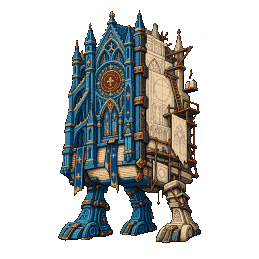
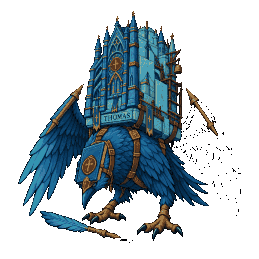
In the gamePick the part of the opponent’s case that is true and affirm it. That point can no longer be used against you, and the opponent’s Defend falls sharply. It deals no damage. Affirm something false and you have only agreed with an error.
“The existence of God can be proved in five ways. The first and more manifest way is the argument from motion… it is necessary to arrive at a first mover, put in motion by no other; and this everyone understands to be God.”
Aquinas, Summa Theologiae I, q.2, a.3 (trans. English Dominican Fathers, public domain). (trimmed quote)public domain
“There is no case known… in which a thing is found to be the efficient cause of itself… Therefore it is necessary to admit a first efficient cause, to which everyone gives the name of God.”
Aquinas, Summa Theologiae I, q.2, a.3, the second way (trans. English Dominican Fathers, public domain). (trimmed quote)public domain
“Therefore we cannot but postulate the existence of some being having of itself its own necessity, and not receiving it from another… This all men speak of as God.”
Aquinas, Summa Theologiae I, q.2, a.3, the third way, from contingency (trans. English Dominican Fathers, public domain). (trimmed quote)public domain
The Five Ways
Natural TheologyArgument · power 78 · 100% accurateIn the gameFive arguments that start from things anyone can see — motion, cause, contingency — and walk to the same place. The move draws one of them.
Strong against
×3Why I Am Not a Christianan argument · why?
Russell attacks "everything must have a cause." Aquinas never wrote that. The Second Way is that nothing can be the efficient cause of itself — a different claim, and the one he walked past. The reader carried the real arguments out of the Philosopher’s Hall.
×2The Possible and the Necessaryan argument · why?
Aquinas builds the same argument from possibility and necessity — and then spends the rest of the book arguing that what it arrives at is one, simple, good, and provident, which is most of the way to the God actually worshiped.
×2The Two Truthsan argument · why?
Aquinas held that faith and reason cannot truly contradict, because God is the source of both. His Five Ways reach God by reason alone, with no need for a second truth.
“It was necessary for man’s salvation that there should be a knowledge revealed by God besides philosophical science built up by human reason.”
Aquinas, Summa Theologiae I, q.1, a.1 (trans. English Dominican Fathers, public domain).public domain
Beyond What Reason Reaches
FaithArgument · power 64 · 100% accurateIn the gameThe first question of the Summa is whether theology should exist at all beside philosophy. The answer sets the limit honestly: some things reason cannot walk to.
“Since therefore grace does not destroy nature but perfects it, natural reason should minister to faith as the natural bent of the will ministers to charity.”
Aquinas, Summa Theologiae I, q.1, a.8 (trans. English Dominican Fathers, public domain). Close to a thesis statement for the whole faith-and-reason tradition.public domain
Grace Perfects Nature
RationalityArgument · power 68 · 100% accurateIn the gameReason is not faith’s rival and not its replacement — it is the thing faith takes up and uses. The book’s own Defend may rise as it says so.
Strong against
×2.5Platoa book · why?
Nobody here says Plato was wrong. The claim is that he was unfinished, and that what he was reaching for came down and finished it.
“And indeed, we believe that thou art a being than which nothing greater can be conceived… But, at any rate, this very fool, when he hears of this being of which I speak… understands what he hears, and what he understands is in his understanding.”
Anselm, Proslogium 2 (trans. Sidney Norton Deane, 1903, public domain). (trimmed quote)public domain
Than Which Nothing Greater
RationalityArgument · power 82 · 90% accurateIn the gameAddressed to the fool of Psalm 14, and it uses his own understanding against him: to deny the idea, he must first hold it. Expensive, and it does not always land.
Strong against
×0.5In Behalf of the Foolan argument · why?
It slides off. Getting from the understanding to the world is the very step he is refusing.