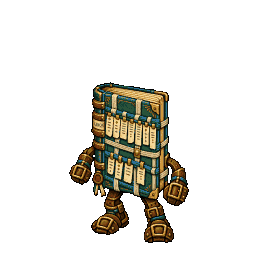


← All books
The 39th Festal Letter

The 39th Festal Letter

Athanasius, Thirty-Ninth Festal Letter (Easter, A.D. 367)

Athanasius, bishop of Alexandria, in the fifth year of his fifth exile’s aftermath

More about Athanasius →

An Easter letter with a list in it, and the list is the reason anyone remembers the Easter.

Catch rate
Not found in the wild
Base research
186
Stat total
274

Base stats

Every stat is a checkable fact about the actual book, not a designer's mood. Bars are drawn against the highest value any book reaches.

Stamina64
Contend74
Defend82
Popularity54
Total274

Why these numbers

The game's own explanation, as a reader sees it in the backpack.

Stamina 64

An Easter letter, not a treatise. The Greek of most of it is lost; what carries the canon survives in Greek, Coptic and Syriac together.

Defend 82

Nobody disputes what this document says. It is the earliest surviving list of exactly the twenty-seven, and it has never needed defending — only reading.

Popularity 54

Middling. It is cited in every argument about the canon, but few people read it beyond those arguments.

Cited for this book

Each year the bishop of Alexandria wrote to the churches of Egypt to announce the date of Easter. In 367, Athanasius used his letter to list the books of the New Testament. It is the earliest list that names exactly the twenty-seven books we have today. He was writing down a canon the churches already used, not inventing one. He also named books, like Wisdom and the Shepherd, that were good to read but not Scripture.

Development

A book develops as it is read — the fragment becomes the work, the work becomes the corpus.

Moves learned

By levelling up. A book that develops keeps what it knew and learns the rest on its new schedule.

LvMoveTypeCat.PwrAccPP
22Fountains of SalvationBibleArgument92100%5
22Appointed to Be ReadEcclesiologyArgument80100%10
24Chapter…BibleScripture——12
50Speak GreekHistoryStatus—100%5

The quotes behind its moves

How to read these. In Scholar’s Dream, books argue with each other. Each thing a book can do in a debate is a move, and most moves carry a real quotation — the words the book puts on the table when it uses that move.

Strong against lists the opposing books and arguments a move was written to answer. Used against one of them, it hits much harder than usual: ×2 means twice the normal force, ×4 four times. It is the game’s way of saying: this is the sentence that answers that argument. Open an entry to read why.

“there are other books besides these not indeed included in the Canon, but appointed by the Fathers to be read by those who newly join us, and who wish for instruction in the word of godliness… that which is called the Teaching of the Apostles, and the Shepherd.”

Athanasius, 39th Festal Letter (367), trans. Archibald Robertson, NPNF² 4, public domain. (trimmed quote)public domain

Appointed to Be Read

EcclesiologyArgument · power 80 · 100% accurate

In the gameThe other half of the first canon list, and the half nobody quotes. Athanasius fixes twenty-seven books and then names a second shelf — real, useful, handed to new converts, and not Scripture. A church that can say which books are which does not have to burn the rest.

“These are fountains of salvation, that they who thirst may be satisfied with the living words they contain. In these alone is proclaimed the doctrine of godliness. Let no man add to these, neither let him take ought from these.”

Athanasius, 39th Festal Letter (367), trans. Archibald Robertson, NPNF² 4, public domain.public domain

Fountains of Salvation

BibleArgument · power 92 · 100% accurate

In the gameEaster 367. The bishop of Alexandria lists the twenty-seven books of the New Testament, in the order the church still has them, and then draws the line around them out loud — the first surviving time anyone does.

Strong against
×4Another Testamentan argument · why?

Athanasius listed the books of the New Testament in 367 and drew the line around them himself: let no man add to these, neither let him take anything from these!

×4The Book of Mormona book · why?

Athanasius listed the books of the New Testament in 367 and drew the line around them himself: let no man add to these, neither let him take anything from these!

×2The Rochester Rappingsan argument · why?

If the dead could add to what God has said, the Bible would never be finished. Athanasius drew the line in 367, and nobody on the other side of the grave was consulted!

What Would Jesus Tech

Helping Christians use tech, find rest, and glorify God.

Listen
All Episodes
Explore Topics
Apple Podcasts
Spotify
About
The Hosts
Speakers
Books
Scripture
Scholar's Dream Game
Contact
Patreon
© 2026 What Would Jesus Tech · whatwouldjesustech.com·