← All books
Aristides Frag.

Aristides Frag.

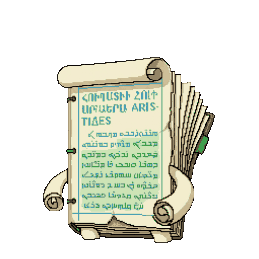
Apology of Aristides (Armenian fragment)

Aristides of Athens

More about Aristides →

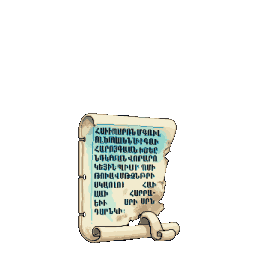
Two chapters, in Armenian, that nobody believed.

Catch rate
150 / 255
Base research
70
Stat total
190

Base stats

Every stat is a checkable fact about the actual book, not a designer's mood. Bars are drawn against the highest value any book reaches.

Stamina42
Contend52
Defend60
Popularity36
Total190

Why these numbers

The game's own explanation, as a reader sees it in the backpack.

Stamina 42

Low. Two chapters out of seventeen. Almost nothing of the book, and for eleven years it was all anyone had.

Defend 60

What survives is complete and uncontested — Defend measures certainty, not size.

Popularity 36

Slow. Ernest Renan declared the fragment a forgery on sight, and it took the manuscript found at Sinai to change scholars’ minds.

Cited for this book

In 1878 the Mechitarist fathers on San Lazzaro, in the Venetian lagoon, printed two chapters of an Armenian text headed with the name of Aristides. Renan pronounced it spurious. He was wrong, and it took eleven years and a monastery on Sinai to prove it.

Development

A book develops as it is read — the fragment becomes the work, the work becomes the corpus.

Moves learned

By levelling up. A book that develops keeps what it knew and learns the rest on its new schedule.

LvMoveTypeCat.PwrAccPP
1The Mover and ControllerNatural TheologyArgument62100%20
1Random VerseBibleArgument10100%30
5SteelmanRationalityType shift——10
9Chapter…BibleScripture——12
11Affirm—Status——1
11Gods Under GuardRationalityArgument74100%15
50Speak GreekHistoryStatus—100%5

The quotes behind its moves

How to read these. In Scholar’s Dream, books argue with each other. Each thing a book can do in a debate is a move, and most moves carry a real quotation — the words the book puts on the table when it uses that move.

Strong against lists the opposing books and arguments a move was written to answer. Used against one of them, it hits much harder than usual: ×2 means twice the normal force, ×4 four times. It is the game’s way of saying: this is the sentence that answers that argument. Open an entry to read why.

“when I had considered the heaven and the earth, the sun and the moon and the rest, I marvelled at their orderly arrangement… I perceived that the mover and controller is God. For everything which causes motion is stronger than that which is moved, and that which controls is stronger than that which is controlled.”

Aristides, Apology 1 (trans. D. M. Kay from the Syriac, ANF 9, public domain).public domain

The Mover and Controller

Natural TheologyArgument · power 62 · 100% accurate

In the gameThe first sentence of the first complete apology, and it is an argument rather than a greeting: things move, movers are stronger than what they move, so run the chain back and see who is standing at the end of it.

“Let every man be swift to hear, slow to speak, and slow to anger.”

James 1:19 (WEB).

Steelman

RationalityType shift

In the gameRestate the foe’s position in its strongest form — exposing its true weak point. Lowers the foe’s Defend. Always fair; never a bad move to use.

“For in him we live, and move, and have our being. As some of your own poets have said.”

Acts 17:28 (WEB) — Paul at the Areopagus, quoting the Athenians’ own poets back to them.

Affirm

Status

In the gamePick the part of the opponent’s case that is true and affirm it. That point can no longer be used against you, and the opponent’s Defend falls sharply. It deals no damage. Affirm something false and you have only agreed with an error.

“they shut them up together in shrines, and worship them, calling them gods, even though they have to guard them securely for fear they should be stolen by robbers. And they did not perceive that anything which acts as guard is greater than that which is guarded, and that he who makes is greater than that which is made.”

Aristides, Apology 3 (trans. D. M. Kay from the Syriac, ANF 9, public domain).public domain

Gods Under Guard

RationalityArgument · power 74 · 100% accurate

In the gameAristides walks past a temple and notices the lock. If a god has to be kept safe from thieves, the guard is stronger than the god — and the man who carved it is stronger still. A child can check this argument, which is why it has never worn out.

Strong against
×3We Will Make You More Godsan argument · why?

A god that has to be locked up against thieves is weaker than the lock — and weaker than the man who carved him.

What Would Jesus Tech

Helping Christians use tech, find rest, and glorify God.

Listen
All Episodes
Explore Topics
Apple Podcasts
Spotify
About
The Hosts
Speakers
Books
Scripture
Scholar's Dream Game
Contact
Patreon
© 2026 What Would Jesus Tech · whatwouldjesustech.com·