← All books
On the Truth of Holy Scripture

On the Truth of Holy Scripture

John Wyclif, De Veritate Sacrae Scripturae (1378)

John Wyclif

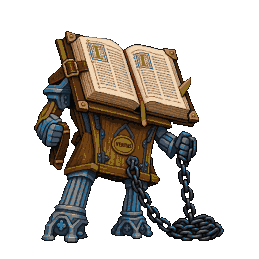
A very long Latin argument that the book on the lectern outranks every hand that has ever held it.

Catch rate
Not found in the wild
Base research
186
Stat total
320

Base stats

Every stat is a checkable fact about the actual book, not a designer's mood. Bars are drawn against the highest value any book reaches.

Stamina88
Contend92
Defend78
Popularity62
Total320

Why these numbers

The game's own explanation, as a reader sees it in the backpack.

Stamina 88

Burnt, dug up and burnt again, and still here. Fuller’s line about the ashes reaching the sea is not decoration — it is what actually happened to the man and did not happen to the argument.

Contend 92

It attacks, and that is unusual for a book about a book. Wyclif is not defending Scripture’s honour; he is using it to take ground off everything that had been put above it.

Defend 78

Middling on purpose. He was condemned in his lifetime, condemned again after his death, and his own university turned on him.

Popularity 62

Latin, enormous, and written for doctors. What travelled was the English Bible and the preachers, not this.

Cited for this book

Oxford’s best philosopher turned on the machinery of his own church and argued, book by book, that nothing may be believed which is not founded on Scripture. He set men to putting the Bible into English. The Council of Constance condemned him thirty-one years after he was buried and had his bones dug up and burnt. Thomas Fuller: “They burnt his bones to ashes and cast them into Swift, a neighboring brook running hardby… And thus the ashes of Wicliffe are the emblem of his doctrine, which now is dispersed the world over.”

Moves learned

By levelling up. A book that develops keeps what it knew and learns the rest on its new schedule.

LvMoveTypeCat.PwrAccPP
1This Is My HandBibleArgument76100%15
1Random VerseBibleArgument10100%30
4Chapter…BibleScripture12
8Nothing Is To Be AddedBibleArgument78100%15
14God’s Word Arouseth InsurrectionEcclesiologyArgument80100%10
20They Stand To EternityBibleArgument82100%10
28Where the Word Is PreachedEcclesiologyArgument93100%5

Read it: They Stand to Eternity

The passages the Scriptorium holds on screen, word for word from a public-domain translation. Written in Latin.

“Nothing is to be believed that is not founded upon this book, and to its teachings nothing is to be added.”

Wyclif, De Veritate Sacrae Scripturae, as summarised in Philip Schaff, History of the Christian Church VI § 41 (public domain).

“Logic, as in Oxford, changes very frequently, yea, every twenty years, but the Scriptures are yea, yea and nay, nay. They never change. They stand to eternity.”

Wyclif, De Veritate Sacrae Scripturae, as summarised in Philip Schaff, History of the Christian Church VI § 41 (public domain).

“For if I say, This is my hand, and if it be not a hand, then am I a liar…”

Wyclif, sermon on Matthew 26:26, in Grenville Kleiser, The World’s Great Sermons I (1908, public domain), elided.

“They said it in Wyclif’s day, and the hypocrites say now, that God’s Word arouseth insurrection.”

Tyndale, quoted in Philip Schaff, History of the Christian Church VI § 40 (public domain).
Notes

Oxford’s best philosopher turned on the machinery of his own church and argued, book by book, that nothing may be believed which is not founded on Scripture. He set men to putting the Bible into English.

The Council of Constance condemned him thirty-one years after he was buried, and had his bones dug up and burnt. Thomas Fuller: the ashes were cast into a brook, and “the ashes of Wicliffe are the emblem of his doctrine, which now is dispersed the world over.”

What Would Jesus Tech

Helping Christians use tech, find rest, and glorify God.

Listen
All Episodes
Explore Topics
Apple Podcasts
Spotify
About
The Hosts
Speakers
Books
Scripture
Scholar's Dream Game
Contact
Patreon
© 2026 What Would Jesus Tech · whatwouldjesustech.com·