← All books
The Triumph of the Cross

The Triumph of the Cross

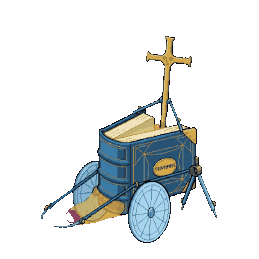
Girolamo Savonarola, Triumphus Crucis (1497)

Girolamo Savonarola

More about Girolamo Savonarola →

A systematic defence of the faith, written by a man with about a year to live and no idea of it.

Catch rate
52 / 255
Base research
180
Stat total
318

Base stats

Every stat is a checkable fact about the actual book, not a designer's mood. Bars are drawn against the highest value any book reaches.

Stamina84
Contend88
Defend82
Popularity64
Total318

Why these numbers

The game's own explanation, as a reader sees it in the backpack.

Stamina 84

Printed, read across Europe, and never the thing he was killed for. The sermons were what got him hanged; this survived because nobody thought a book of apologetics was dangerous.

Contend 88

It is on the front foot from the first page — three books, marching from the existence of God to whether the Trinity can be believed at all.

Defend 82

He grants more than most apologists dare. Reason gets you part of the way and no further, and he says so before an opponent can say it for him.

Popularity 64

Latin, systematic, and in the shadow of a man whose reputation is a bonfire in a public square.

Cited for this book

Girolamo Savonarola was a Dominican friar who ran Florence for four years, burned the city’s vanities, was excommunicated, and was hanged and burned in 1498. In the middle of all that he wrote this plain argument for the faith, in three parts: what reason can reach, what it cannot, and why the rest is still believable.

Moves learned

By levelling up. A book that develops keeps what it knew and learns the rest on its new schedule.

LvMoveTypeCat.PwrAccPP
1Random VerseBibleArgument10100%30
4Chapter…BibleScripture——12
10Affirm—Status——1
10In No Wise ContraryTheology ProperArgument76100%15
18Argument from DesignNatural TheologyArgument76100%10
26Grace Perfects NatureRationalityArgument68100%15
34By Their EffectsRationalityArgument80100%10
42Considered CollectivelyRationalityArgument84100%10
50Speak LatinHistoryStatus—100%5
56Proud Or FoolishChristologyArgument86100%10
64Waxed Stronger By Its ConflictsHistoryArgument88100%10

The quotes behind its moves

How to read these. In Scholar’s Dream, books argue with each other. Each thing a book can do in a debate is a move, and most moves carry a real quotation — the words the book puts on the table when it uses that move.

Strong against lists the opposing books and arguments a move was written to answer. Used against one of them, it hits much harder than usual: ×2 means twice the normal force, ×4 four times. It is the game’s way of saying: this is the sentence that answers that argument. Open an entry to read why.

“For in him we live, and move, and have our being. As some of your own poets have said.”

Acts 17:28 (WEB) — Paul at the Areopagus, quoting the Athenians’ own poets back to them.

Affirm

Status

In the gamePick the part of the opponent’s case that is true and affirm it. That point can no longer be used against you, and the opponent’s Defend falls sharply. It deals no damage. Affirm something false and you have only agreed with an error.

“We hold that there is One God, of most pure nature; and our belief is in no wise contrary to philosophy.”

Savonarola, The Triumph of the Cross III.3 (trans. ed. Fr John Procter, public domain).public domain

In No Wise Contrary

Theology ProperArgument · power 76 · 100% accurate

In the gameThe Trinity is above reason and not against it, and the difference is the whole argument. He states the doctrine by ruling out the two ways of getting it wrong.

“The very beauty of our own figure especially confesses God to be its artificer: our upright stature, our uplooking countenance, our eyes placed at the top, as it were, for outlook; and all the rest of our senses as if arranged in a citadel.”

Minucius Felix, Octavius 18 (trans. Wallis, ANF 4, public domain).public domain

Argument from Design

Natural TheologyArgument · power 76 · 100% accurate

In the gameA made thing argues for its maker. The body stands upright with its senses set high like a garrison; the world goes on being worth looking at long after the workman has gone. Either one is evidence, and neither had to be that way.

Strong against
×2.5Nein!an argument · why?

Paul did not preach to Athens from the Word alone. He started with their altar and their poets. If Barth is right, Acts 17 should not have been written.

“Since therefore grace does not destroy nature but perfects it, natural reason should minister to faith as the natural bent of the will ministers to charity.”

Aquinas, Summa Theologiae I, q.1, a.8 (trans. English Dominican Fathers, public domain). Close to a thesis statement for the whole faith-and-reason tradition.public domain

Grace Perfects Nature

RationalityArgument · power 68 · 100% accurate

In the gameReason is not faith’s rival and not its replacement — it is the thing faith takes up and uses. The book’s own Defend may rise as it says so.

Strong against
×2.5Platoa book · why?

Nobody here says Plato was wrong. The claim is that he was unfinished, and that what he was reaching for came down and finished it.

“But, although we cannot prove these truths by natural effects or human arguments, we may, nevertheless, make ourselves very sure of them by their supernatural effects.”

Savonarola, The Triumph of the Cross I.5 (trans. ed. Fr John Procter, public domain).public domain

By Their Effects

RationalityArgument · power 80 · 100% accurate

In the gameReason walks you to the door and stops. Savonarola grants that plainly, and then argues from what the faith has actually done in the world instead of pretending reason went further.

“For, should we not be convinced by one of His miracles or arguments, we cannot (unless we be obstinate) fail to be persuaded when we consider His works and teaching collectively.”

Savonarola, The Triumph of the Cross I.2 (trans. ed. Fr John Procter, 1901, public domain).public domain

Considered Collectively

RationalityArgument · power 84 · 100% accurate

In the gameSavonarola will not let the evidence be judged one piece at a time, because nobody weighs a person that way. Any one work can be shrugged off. Set them side by side, he says, and see what is left.

Strong against
×2.5The Ethics of Beliefan argument · why?

Clifford wants sufficient evidence for each belief, taken one at a time, and a duty to withhold otherwise. Savonarola answers that nobody weighs a PERSON that way: the works are dependent on each other, and the honest question is what they come to together.

“Had Christ not been God, He would have been the most proud and the most foolish of men. And if (as some hold) the assertion of His Divinity was not made by Himself but by His disciples, how can a religion of such goodness, wisdom, and power, be the outcome of such a falsehood?”

Savonarola, The Triumph of the Cross II.16 (trans. ed. Fr John Procter, 1901, public domain).public domain

Proud Or Foolish

ChristologyArgument · power 86 · 100% accurate

In the gameSavonarola’s version of a famous choice, four centuries early. If Christ never claimed to be God and his disciples added it later, then a faith this good grew from a lie told by its first teachers. Savonarola asks how that could happen.

Strong against
×2.5The Tübingen Thesisan argument · why?

Baur has the divinity constructed by the early church out of its own party conflict. Savonarola takes that seriously enough to follow it: a religion of this quality then has to be the outcome of a falsehood told by the very men who taught it, and he asks how that works.

“No religion has endured the constant and cruel persecution inflicted on Christianity… other religions which persecuted Christianity, have died out, of themselves, without being persecuted. Christianity has only flourished, and waxed stronger, by means of its conflicts.”

Savonarola, The Triumph of the Cross II.16 (trans. ed. Fr John Procter, 1901, public domain). (trimmed quote)public domain

Waxed Stronger By Its Conflicts

HistoryArgument · power 88 · 100% accurate

In the gameSavonarola compares Christianity with the religions of the empire. The persecuting religions faded without being persecuted. Christianity was persecuted and grew. He asks for an explanation.

Strong against
×2.5The History of Religionsan argument · why?

Set beside the mystery cults, Christianity becomes one of a class. Savonarola asks the class to behave alike under pressure and it does not: the religions doing the persecuting died out unpersecuted, and the persecuted one grew.

What answers it

The specific move or chapter of Scripture that cuts through this one, and why. The number is how much harder it hits than usual — ×4 is four times the normal force.

No Shared Scripture×2.5

Savonarola wrote the Triumph of the Cross to do for his age what Aquinas’s Contra Gentiles did for the Middle Ages. This is Aquinas’s own opening move.

Sent in the Power of Arms×2

Savonarola followed the plan of Aquinas’s Contra Gentiles, and this is one of its arguments.

What Would Jesus Tech

Helping Christians use tech, find rest, and glorify God.

Listen
All Episodes
Explore Topics
Apple Podcasts
Spotify
About
The Hosts
Speakers
Books
Scripture
Scholar's Dream Game
Contact
Patreon
© 2026 What Would Jesus Tech · whatwouldjesustech.com·