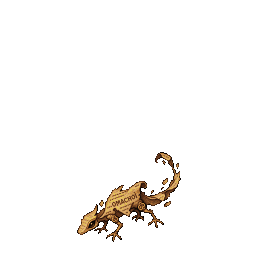
Against the Spirit’s Deity
A Pneumatomachian tract, unattributed — the Macedonian party, no longer extant
The Macedonian (Pneumatomachian) party
The controversy that made the Nicene Creed grow a third paragraph, at Constantinople in 381.
- Catch rate
- 140 / 255
- Base research
- 90
- Stat total
- 206
Base stats
Every stat is a checkable fact about the actual book, not a designer's mood. Bars are drawn against the highest value any book reaches.
Why these numbers
The game's own explanation, as a reader sees it in the backpack.
Nothing under Macedonius’s own name survives at all — this shelf holds the party’s position, reconstructed from the two men who spent whole books answering it.
Cited for this book
Nothing of Macedonius’s own writing survives; the Pneumatomachian position is reconstructed from Basil, On the Holy Spirit, and Gregory Nazianzen, Oration 31 (NPNF2 vols. 8 and 7, public domain).
Moves learned
By levelling up. A book that develops keeps what it knew and learns the rest on its new schedule.
| Lv | Move | Type | Cat. | Pwr | Acc | PP |
|---|---|---|---|---|---|---|
| 1 | Merely a Breath | Theology Proper | Argument | 50 | 100% | 15 |
| 1 | Silence | Christology | Type shift | — | — | 10 |
| 10 | Red Herring | Lie | Status | — | 50% | 15 |
What answers it
The specific move or chapter of Scripture that cuts through this argument, and why.
Nicaea spent all its breath on the Son and gave the Holy Spirit five words: “And in the Holy Spirit.” Full stop. Fifty-six years later a party called the Pneumatomachi — the Spirit-fighters — took the creed at its word: grant the Son everything, they said, and the Spirit is still a creature. So a hundred and fifty bishops met in Constantine’s own church and finished the sentence. The Spirit is the Lord and Giver of life, who proceeds from the Father, who with the Father and the Son together is worshipped and glorified. Worshipped. That is the whole argument in one verb: you do not worship a creature.
The First Council of Constantinople, 381, in the Church of Hagia Irene; the Niceno-Constantinopolitan Creed, art. 3 (see Percival, NPNF² 14).
Basil’s whole answer to "he is not a slave, not a master, but free" is one distinction: in this world some men are masters and some are servants by circumstance, not by nature — no one is born a slave. But nothing in creation escapes serving SOMETHING. So there are only two places to stand: with the rest of creation, serving; or above creation, sharing its rule. There is no free-floating third option, and the Spirit is either fully in the first or fully in the second.
See Basil of Caesarea, On the Holy Spirit 20.51 (trans. Blomfield Jackson, NPNF² 8, public domain).