
← All books
The German Bible

The German Bible

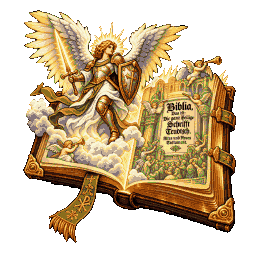
Biblia, das ist die gantze Heilige Schrifft Deudsch (Wittenberg, 1534)

Luther, with Melanchthon, Aurogallus, Bugenhagen and a room full of arguing

The book that decided what German would be, assembled by a committee that could not agree on anything quickly.

Catch rate
Not found in the wild
Base research
960
Stat total
1120

Base stats

Every stat is a checkable fact about the actual book, not a designer's mood. Bars are drawn against the highest value any book reaches.

Stamina300
Contend280
Defend275
Popularity265
Total1120

Why these numbers

The game's own explanation, as a reader sees it in the backpack.

Stamina 300

The whole of it, Hebrew and Greek, revised for the rest of his life. As much book as this dream contains.

Contend 280

The Old Testament arrives, and with it every argument the New Testament had been quoting at people who could not check.

Defend 275

Twelve years, a committee, and the Hebrew read out loud until the German sounded like something a person would say.

Popularity 265

It did not only sell. It standardised the language it was written in, which is a kind of circulation nothing else here achieves.

Cited for this book

Twelve years after the September Testament, and not done alone: Melanchthon for the Greek, Aurogallus for the Hebrew, a standing committee that argued over single words for weeks. Luther’s rule was that you do not ask the Latin how to say it — you ask the mother in the house, the children in the street, the man at the market, and then you write down how they talk.

Development

A book develops as it is read — the fragment becomes the work, the work becomes the corpus.

Moves learned

By levelling up. A book that develops keeps what it knew and learns the rest on its new schedule.

LvMoveTypeCat.PwrAccPP
1Into Their Own TongueExegesisArgument84100%10
1Random VerseBibleArgument10100%30
44Chapter…BibleScripture12
46As on Angels’ WingsHistoryArgument82100%15
49A Boy That Driveth the PloughBibleArgument8895%10
52Scripture or Plain ReasonBibleArgument95100%5
55Back to the GrandfathersHistoryArgument80100%15

Read it: The Mother in the House

The passages the Scriptorium holds on screen, word for word from a public-domain translation. Written in German.

“Unless I am refuted and convicted by testimonies of the Scriptures or by clear arguments (since I believe neither the Pope nor the Councils alone; it being evident that they have often erred and contradicted themselves), I am conquered by the Holy Scriptures quoted by me, and my conscience is bound in the word of God.”

Luther before the Diet of Worms, 18 April 1521, in Schaff, History of the Christian Church VII §54 (1888), public domain, elided.

“While Eck looked to the fathers, Luther went back to the grandfathers; he ascended from the stream of church history to the fountain of God’s Word.”

Schaff, History of the Christian Church VII §37 (1888), public domain.

“…the latter furnished the text from which, with the aid of Jerome’s Vulgate, the translations of Luther and Tyndale were made.”

Of Erasmus’ Greek Testament, in Schaff, History of the Christian Church VII, on the Bible in the vernacular (1888), public domain.
Notes

The September Testament was done in eleven weeks in hiding at the Wartburg. The full Bible took twelve more years and a room full of arguing — Melanchthon for the Greek, Aurogallus for the Hebrew, a standing committee over single words.

Luther’s rule was that you do not ask the Latin how to say it. You ask the mother in the house, the children in the street, the man at the market, and then you write down how they talk.

“Back to the grandfathers” is Schaff’s line for what happened at Leipzig, and it is the whole method: past the fathers, past the councils, to the fountain.

What Would Jesus Tech

Helping Christians use tech, find rest, and glorify God.

Listen
All Episodes
Explore Topics
Apple Podcasts
Spotify
About
The Hosts
Speakers
Books
Scripture
Scholar's Dream Game
Contact
Patreon
© 2026 What Would Jesus Tech · whatwouldjesustech.com·