← All books
An Inquiry into the Human Mind

An Inquiry into the Human Mind

Thomas Reid, on the Principles of Common Sense (1764)

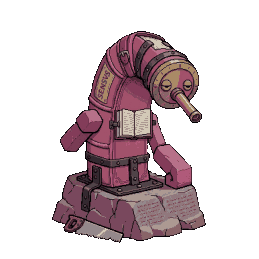
Thomas Reid — Church of Scotland minister and professor, founder of the Scottish school of common-sense philosophy

More about Thomas Reid →

Plain, careful, and entirely willing to let an argument run to wherever it actually goes.

Catch rate
28 / 255
Base research
242
Stat total
342

Base stats

Every stat is a checkable fact about the actual book, not a designer's mood. Bars are drawn against the highest value any book reaches.

Stamina80
Contend90
Defend92
Popularity80
Total342

Why these numbers

The game's own explanation, as a reader sees it in the backpack.

Stamina 80

Patient and methodical — Reid built an entire school out of taking one observation seriously.

Contend 90

Turns Hume’s own method against his conclusion: skepticism, followed all the way down, has to doubt the faculties it is using to doubt with.

Defend 92

The first principles Reid names — memory, the senses, testimony, the uniformity of nature — are the ground UNDER every objection anyone could raise, including Hume’s own.

Popularity 80

"Common sense" is Reid’s own name for it, and he meant the phrase as a technical term, not a dismissal.

Cited for this book

Thomas Reid argued that some beliefs are not conclusions of reasoning. They are what reasoning stands on: trusting memory, the senses and other people’s testimony. A skeptic who doubts these must still use them to doubt. Reid was a minister as well as a philosopher, and he held that honest reason leads back to trust.

Moves learned

By levelling up. A book that develops keeps what it knew and learns the rest on its new schedule.

LvMoveTypeCat.PwrAccPP
1Random VerseBibleArgument10100%30
30Chapter…BibleScripture——12
32Affirm—Status——1
40Reason Itself Must StoopPresuppositionArgument72100%10
44Little Better Than A ChangelingPresuppositionArgument86100%10
50The Wisdom of PhilosophyPresuppositionArgument88100%10
56The Furniture Nature Gave UsPresuppositionArgument90100%10
62No Other RootPresuppositionArgument92100%10

The quotes behind its moves

How to read these. In Scholar’s Dream, books argue with each other. Each thing a book can do in a debate is a move, and most moves carry a real quotation — the words the book puts on the table when it uses that move.

Strong against lists the opposing books and arguments a move was written to answer. Used against one of them, it hits much harder than usual: ×2 means twice the normal force, ×4 four times. It is the game’s way of saying: this is the sentence that answers that argument. Open an entry to read why.

“For in him we live, and move, and have our being. As some of your own poets have said.”

Acts 17:28 (WEB) — Paul at the Areopagus, quoting the Athenians’ own poets back to them.

Affirm

Status

In the gamePick the part of the opponent’s case that is true and affirm it. That point can no longer be used against you, and the opponent’s Defend falls sharply. It deals no damage. Affirm something false and you have only agreed with an error.

“It declines the tribunal of reason, and laughs at all the artillery of the logician. It retains its sovereign authority in spite of all the edicts of philosophy, and reason itself must stoop to its orders.”

Thomas Reid, An Inquiry into the Human Mind on the Principles of Common Sense (1764), public domain.public domain

Reason Itself Must Stoop

PresuppositionArgument · power 72 · 100% accurate

In the gameBelief in a world outside one’s own mind is a first principle that Hume’s method cannot prove and cannot do without. A skeptic has to stand on that ground in order to doubt it.

“I found, that if I had not believed what they told me, before I could give a reason of my belief, I had to this day been little better than a changeling.”

Thomas Reid, An Inquiry into the Human Mind on the Principles of Common Sense (1764), public domain.public domain

Little Better Than A Changeling

PresuppositionArgument · power 86 · 100% accurate

In the gameNot a proof that testimony is reliable — a plain admission that nobody, Hume included, ever waited for one before trusting it. A child who withheld belief until it had a reason would never have learned enough to reason at all.

Strong against
×3A Uniform Experience Against Itan argument · why?

Follow Hume’s skepticism to the root and it has to doubt the very faculties — memory, the senses, testimony itself — that it is using to doubt with. Reid names the branch it is sawing off.

×3An Enquiry Concerning Human Understandinga book · why?

Follow Hume’s skepticism to the root and it has to doubt the very faculties — memory, the senses, testimony itself — that it is using to doubt with. Reid names the branch it is sawing off.

“Thus, the wisdom of philosophy is set in opposition to the common sense of mankind. The first pretends to demonstrate a priori, that there can be no such thing as a material world; that sun, moon, stars, and earth, vegetable and animal bodies, are, and can be nothing else, but sensations in the mind.”

Thomas Reid, An Inquiry into the Human Mind on the Principles of Common Sense (1764), Ch. I § 3, public domain.public domain

The Wisdom of Philosophy

PresuppositionArgument · power 88 · 100% accurate

In the gameReid states the conclusion the reasoning of his century had reached, in its own words, without softening it — and lets the reader notice that a proof ending here has told you more about the proof than about the world.

Strong against
×2.5Christianity Not Mysteriousan argument · why?

Toland makes reason the measure of what may be believed. Reid prints what the reasoning of his own century had measured its way to — no sun, no moon, no bodies, nothing but sensations in a mind — and asks whether a proof that ends there has told you about the world or about the proof.

“Such original and natural judgments are therefore a part of that furniture which nature hath given to the human understanding. They are the inspiration of the Almighty, no less than our notions or simple apprehensions. They serve to direct us in the common affairs of life, where our reasoning faculty would leave us in the dark.”

Thomas Reid, An Inquiry into the Human Mind on the Principles of Common Sense (1764), Ch. VII, public domain.public domain

The Furniture Nature Gave Us

PresuppositionArgument · power 90 · 100% accurate

In the gameThe judgments a person cannot help making — that there is a world, that memory reports the past, that other people are people — are not conclusions anybody argued their way to. Reid says where they came from and declines to apologise for having them.

Strong against
×2.5The Ethics of Beliefan argument · why?

Clifford wants every belief resting on sufficient evidence. Reid names the beliefs nobody has evidence for and nobody can work without — that there is a world, that memory reports the past, that other people are people — and asks which evidence is supposed to come before those.

“Common Sense holds nothing of Philosophy, nor needs her aid. But, on the other hand, Philosophy… has no other root but the principles of Common Sense; it grows out of them and draws its nourishment from them.”

Thomas Reid, An Inquiry into the Human Mind on the Principles of Common Sense (1764), Ch. I § 4, public domain. (trimmed quote — a parenthesis on the metaphor is cut, and the sentence stops short of a word the scan garbles.)public domain

No Other Root

PresuppositionArgument · power 92 · 100% accurate

In the gameReid is not anti-philosophical and says so plainly. His claim is about which of the two is holding the other up, and it is not the one that thinks it is.

Strong against
×2.5Room for Beliefan argument · why?

Kant saves faith by walling it off from knowledge, which leaves reason sovereign inside its own wall. Reid is not anti-philosophical and says so; his claim is about which of the two is holding the other up, and it is not the one that thinks it is.

×2.5The Critique of Pure Reasona book · why?

Kant saves faith by walling it off from knowledge, which leaves reason sovereign inside its own wall. Reid is not anti-philosophical and says so; his claim is about which of the two is holding the other up, and it is not the one that thinks it is.

What Would Jesus Tech

Helping Christians use tech, find rest, and glorify God.

Listen
All Episodes
Explore Topics
Apple Podcasts
Spotify
About
The Hosts
Speakers
Books
Scripture
Scholar's Dream Game
Contact
Patreon
© 2026 What Would Jesus Tech · whatwouldjesustech.com·