← All books
Cur Deus Homo

Cur Deus Homo

Anselm of Canterbury, Cur Deus Homo (Why God Became Man)

Anselm, archbishop of Canterbury

More about Anselm of Canterbury →

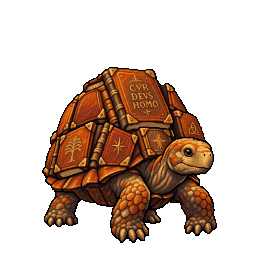
Why God became man, worked out as a debt nobody else could settle. Boso keeps asking the awkward question, which is his job.

Catch rate
52 / 255
Base research
176
Stat total
294

Base stats

Every stat is a checkable fact about the actual book, not a designer's mood. Bars are drawn against the highest value any book reaches.

Stamina68
Contend82
Defend76
Popularity68
Total294

Why these numbers

The game's own explanation, as a reader sees it in the backpack.

Stamina 68

Moderate. Two books of dialogue, complete, and short enough to read in an evening.

Contend 82

High. It defines sin as an unpaid debt and follows the reasoning through: only a man ought to pay it, and only God could.

Defend 76

The book argues against its own case on purpose — Boso is instructed to bring the strongest objection an unbeliever has. A position built under that pressure is hard to knock over.

Popularity 68

The standard reference point for every later account of the atonement, including the ones that disagree with it.

Cited for this book

Anselm says in his own preface why he wrote it: unbelievers were bringing the objection up and ridiculing Christian simplicity as absurd. So the book is addressed to that objection rather than around it — and the interlocutor, Boso, is instructed to put the case as strongly as it can be put.

Moves learned

By levelling up. A book that develops keeps what it knew and learns the rest on its new schedule.

LvMoveTypeCat.PwrAccPP
1Speak LatinHistoryStatus—100%5
1Affirm—Status——1
1What Is OwedSoteriologyArgument72100%15
1Random VerseBibleArgument10100%30
34Chapter…BibleScripture——12
38The Burden of SinSoteriologyType shift——10
43Than Which Nothing GreaterRationalityArgument8290%5
46None but God, None but ManSoteriologyArgument84100%5

The quotes behind its moves

How to read these. In Scholar’s Dream, books argue with each other. Each thing a book can do in a debate is a move, and most moves carry a real quotation — the words the book puts on the table when it uses that move.

Strong against lists the opposing books and arguments a move was written to answer. Used against one of them, it hits much harder than usual: ×2 means twice the normal force, ×4 four times. It is the game’s way of saying: this is the sentence that answers that argument. Open an entry to read why.

“For in him we live, and move, and have our being. As some of your own poets have said.”

Acts 17:28 (WEB) — Paul at the Areopagus, quoting the Athenians’ own poets back to them.

Affirm

Status

In the gamePick the part of the opponent’s case that is true and affirm it. That point can no longer be used against you, and the opponent’s Defend falls sharply. It deals no damage. Affirm something false and you have only agreed with an error.

“Therefore to sin is nothing else than not to render to God his due… This is the debt which man and angel owe to God, and no one who pays this debt commits sin.”

Anselm, Cur Deus Homo 1.11 (trans. Deane, 1903, public domain). (trimmed quote)public domain

What Is Owed

SoteriologyArgument · power 72 · 100% accurate

In the gameSin defined without a word about feelings or rules: it is a debt not paid. Everything Anselm says about the cross follows from this one sentence.

Strong against
×3The Five Common Notionsan argument · why?

Anselm defines sin as failing to give God what we owe him. Herbert’s five notions tell us that we owe it. They cannot tell us how the debt is paid.

“You have not as yet estimated the great burden of sin.”

Anselm, Cur Deus Homo 1.21 (trans. Deane, 1903, public domain). The popular “weight of sin” is a paraphrase; Deane reads “burden.”public domain

The Burden of Sin

SoteriologyType shift

In the gameBoso says a moment’s honest regret would surely settle it. Anselm tells him he has not yet weighed the thing he is offering to settle. Greatly lowers the foe’s Defend.

“And indeed, we believe that thou art a being than which nothing greater can be conceived… But, at any rate, this very fool, when he hears of this being of which I speak… understands what he hears, and what he understands is in his understanding.”

Anselm, Proslogium 2 (trans. Sidney Norton Deane, 1903, public domain). (trimmed quote)public domain

Than Which Nothing Greater

RationalityArgument · power 82 · 90% accurate

In the gameAddressed to the fool of Psalm 14, and it uses his own understanding against him: to deny the idea, he must first hold it. Expensive, and it does not always land.

Strong against
×0.5In Behalf of the Foolan argument · why?

It slides off. Getting from the understanding to the world is the very step he is refusing.

“Therefore none but God can make this satisfaction… But none but a man ought to do this.”

Anselm, Cur Deus Homo 2.6 (trans. Deane, 1903, public domain). (trimmed quote)public domain

None but God, None but Man

SoteriologyArgument · power 84 · 100% accurate

In the gameThe whole book arrives here. The debt is owed by man and payable only by God, so it is paid by the one who is both — and there was never a second way to read the arithmetic.

Strong against
×4The Five Common Notionsan argument · why?

His fourth article says crimes must be expiated by repentance. Anselm did the arithmetic in 1098: the debt is owed by man and payable by none but God.

Read it: The Burden of Sin

The passages the Scriptorium holds on screen, word for word from a public-domain translation. Written in Latin.

“Therefore to sin is nothing else than not to render to God his due… This is the debt which man and angel owe to God, and no one who pays this debt commits sin.”

Anselm, Cur Deus Homo 1.11 (trans. Deane, 1903, public domain). (trimmed quote)

“You have not as yet estimated the great burden of sin.”

Anselm, Cur Deus Homo 1.21 (trans. Deane, 1903, public domain). The popular “weight of sin” is a paraphrase; Deane reads “burden.”

“Therefore none but God can make this satisfaction… But none but a man ought to do this.”

Anselm, Cur Deus Homo 2.6 (trans. Deane, 1903, public domain). (trimmed quote)
Notes

Anselm says in his own preface why he wrote it: unbelievers were bringing the objection up and ridiculing Christian simplicity as absurd. So the book is addressed to that objection rather than around it.

The interlocutor, Boso, is instructed to put the case against as strongly as it can be put. Only God can pay the debt; only a man owes it. The two halves of that sentence are the argument for the incarnation.

What Would Jesus Tech

Helping Christians use tech, find rest, and glorify God.

Listen
All Episodes
Explore Topics
Apple Podcasts
Spotify
About
The Hosts
Speakers
Books
Scripture
Scholar's Dream Game
Contact
Patreon
© 2026 What Would Jesus Tech · whatwouldjesustech.com·