← All books
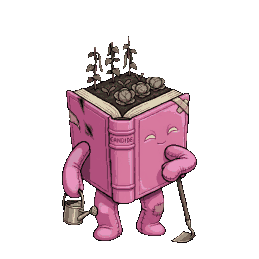
Candide

Candide

Voltaire, Candide, or Optimism (1759)

Voltaire — written in three days in 1758, published anonymously in Geneva the next January, and denied by its author for years

Catch rate
70 / 255
Base research
250
Stat total
360

Base stats

Every stat is a checkable fact about the actual book, not a designer's mood. Bars are drawn against the highest value any book reaches.

Stamina84
Contend100
Defend70
Popularity106
Total360

Why these numbers

The game's own explanation, as a reader sees it in the backpack.

Stamina 84

STAMINA — Middling. It is a short book, thirty chapters, most of them a few pages long.

Contend 100

CONTEND — High. Every chapter lands one more disaster on a man who has been told all is for the best.

Defend 70

DEFEND — Low. It is satire, and satire mocks a position rather than defending one of its own.

Popularity 106

POPULARITY — High. It sold twenty editions in its first year. Geneva burned it and Paris banned it.

Cited for this book

Voltaire wrote Candide in 1758, three years after the Lisbon earthquake. Its hero is taught by Pangloss that all is for the best, and then everything goes wrong. Voltaire was mocking the philosopher Leibniz, not the Bible. It ends with Candide saying they must cultivate their garden.

Moves learned

By levelling up. A book that develops keeps what it knew and learns the rest on its new schedule.

LvMoveTypeCat.PwrAccPP
1Noses for SpectaclesRationalityArgument80100%12
24What Then Are the Others?ExperienceArgument88100%10
40Cultivate Our GardenEthicsArgument70100%15

The quotes behind its moves

How to read these. In Scholar’s Dream, books argue with each other. Each thing a book can do in a debate is a move, and most moves carry a real quotation — the words the book puts on the table when it uses that move.

Strong against lists the opposing books and arguments a move was written to answer. Used against one of them, it hits much harder than usual: ×2 means twice the normal force, ×4 four times. It is the game’s way of saying: this is the sentence that answers that argument. Open an entry to read why.

“It is demonstrable… that things cannot be otherwise than as they are; for all being created for an end, all is necessarily for the best end. Observe, that the nose has been formed to bear spectacles—thus we have spectacles.”

Voltaire, Candide (1759), ch. 1 (Boni & Liveright, 1918, public domain).public domain

Noses for Spectacles

RationalityArgument · power 80 · 100% accurate

In the gamePangloss teaches that everything exists for the best possible purpose, and proves it with spectacles. Voltaire was mocking Leibniz, who argued that this must be the best of all possible worlds.

“If this is the best of possible worlds, what then are the others?”

Voltaire, Candide (1759), ch. 6 (Boni & Liveright, 1918, public domain).public domain

What Then Are the Others?

ExperienceArgument · power 88 · 100% accurate

In the gameCandide says this covered in blood. He has just been flogged at a public burning in Lisbon, and his teacher has been hanged. It is the question of the whole book.

“All that is very well,” answered Candide, “but let us cultivate our garden.”

Voltaire, Candide (1759), ch. 30 (Boni & Liveright, 1918, public domain).public domain

Cultivate Our Garden

EthicsArgument · power 70 · 100% accurate

In the gameThe last line of Candide. He stops arguing about providence and goes to work. Pangloss points out that Adam was put in Eden to work the ground, and Candide does not answer him.

What answers it

The specific move or chapter of Scripture that cuts through this one, and why. The number is how much harder it hits than usual — ×4 is four times the normal force.

A Good God Made It Good×4

Voltaire is right about the morning and wrong about what it proves. Augustine refuses to read the rubble back into the design: the world was made good, by a good God, for no reason except that he is good. A ruined thing is a good thing ruined.

Deficient, Not Efficient×3

The poem asks who authored the horror. Augustine answers that nothing did. An evil will has no cause that makes it, only a failure that leaves it — and hunting for the cause of a defect is, in his own comparison, trying to see darkness or hear silence.

No Nature At All Is Evil×2.5

Granting every word about the dead: the earth that moved is not a malevolent thing, and neither was the sea. There is no evil nature anywhere to carry the blame for Lisbon — only good ones with something gone missing out of them.

What Would Jesus Tech

Helping Christians use tech, find rest, and glorify God.

Listen
All Episodes
Explore Topics
Apple Podcasts
Spotify
About
The Hosts
Speakers
Books
Scripture
Scholar's Dream Game
Contact
Patreon
© 2026 What Would Jesus Tech · whatwouldjesustech.com·