← All books
Apodeixis

Apodeixis

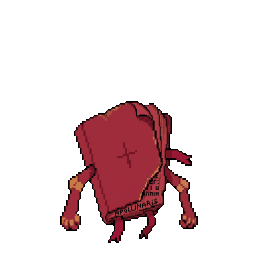
Apollinaris of Laodicea, Apodeixis and other fragments

Apollinaris of Laodicea

More about Apollinaris of Laodicea →

Bishop of Laodicea, and a friend of Athanasius once — until he decided Christ’s body needed no human mind inside it.

Catch rate
110 / 255
Base research
135
Stat total
242

Base stats

Every stat is a checkable fact about the actual book, not a designer's mood. Bars are drawn against the highest value any book reaches.

Stamina64
Contend66
Defend58
Popularity54
Total242

Why these numbers

The game's own explanation, as a reader sees it in the backpack.

Defend 58

Middling. Little survives under Apollinaris’ own name: after Constantinople condemned him in 381, his students kept his teaching alive, but most copies of his own writing did not survive.

Cited for this book

Apollinaris’s own writings survive mostly in fragments quoted by opponents; his position is summarized here from Gregory of Nyssa’s Antirrheticus and Gregory Nazianzen’s Epistles 101–102 to Cledonius (NPNF2 vol. 7, public domain).

Moves learned

By levelling up. A book that develops keeps what it knew and learns the rest on its new schedule.

LvMoveTypeCat.PwrAccPP
1The Logos Did the ThinkingChristologyArgument58100%15
1SteelmanRationalityType shift——10
10Ad HominemLieArgument3555%15
18Twisting TruthLieArgument65100%15
50Speak GreekHistoryStatus—100%5

The quotes behind its moves

How to read these. In Scholar’s Dream, books argue with each other. Each thing a book can do in a debate is a move, and most moves carry a real quotation — the words the book puts on the table when it uses that move.

Strong against lists the opposing books and arguments a move was written to answer. Used against one of them, it hits much harder than usual: ×2 means twice the normal force, ×4 four times. It is the game’s way of saying: this is the sentence that answers that argument. Open an entry to read why.

“Let every man be swift to hear, slow to speak, and slow to anger.”

James 1:19 (WEB).

Steelman

RationalityType shift

In the gameRestate the foe’s position in its strongest form — exposing its true weak point. Lowers the foe’s Defend. Always fair; never a bad move to use.

What answers it

The specific move or chapter of Scripture that cuts through this one, and why. The number is how much harder it hits than usual — ×4 is four times the normal force.

Luke 2×2 · Scripture

Apollinaris loved Christ’s divinity so much that he trimmed his humanity: the Word took a body, he said, but not a human mind. Gregory of Nazianzus answered that a Saviour must take on every part of what he saves: “if [Christ] has a soul, and yet is without a [human] mind, how is he man, for man is not a mindless animal?… How does this relate to me? For deity joined to flesh alone is not man.” If Christ had no human mind, no human mind is healed.

Gregory of Nazianzus, Letter 101, as quoted in Coleman Ford, "Christological Controversies in the Early Church," TGC Concise Theology, The Gospel Coalition, thegospelcoalition.org/essay/christological-controversies-in-the-early-church/, licensed CC BY-SA 4.0.
What Would Jesus Tech

Helping Christians use tech, find rest, and glorify God.

Listen
All Episodes
Explore Topics
Apple Podcasts
Spotify
About
The Hosts
Speakers
Books
Scripture
Scholar's Dream Game
Contact
Patreon
© 2026 What Would Jesus Tech · whatwouldjesustech.com·